Skip to content


Table of Contents
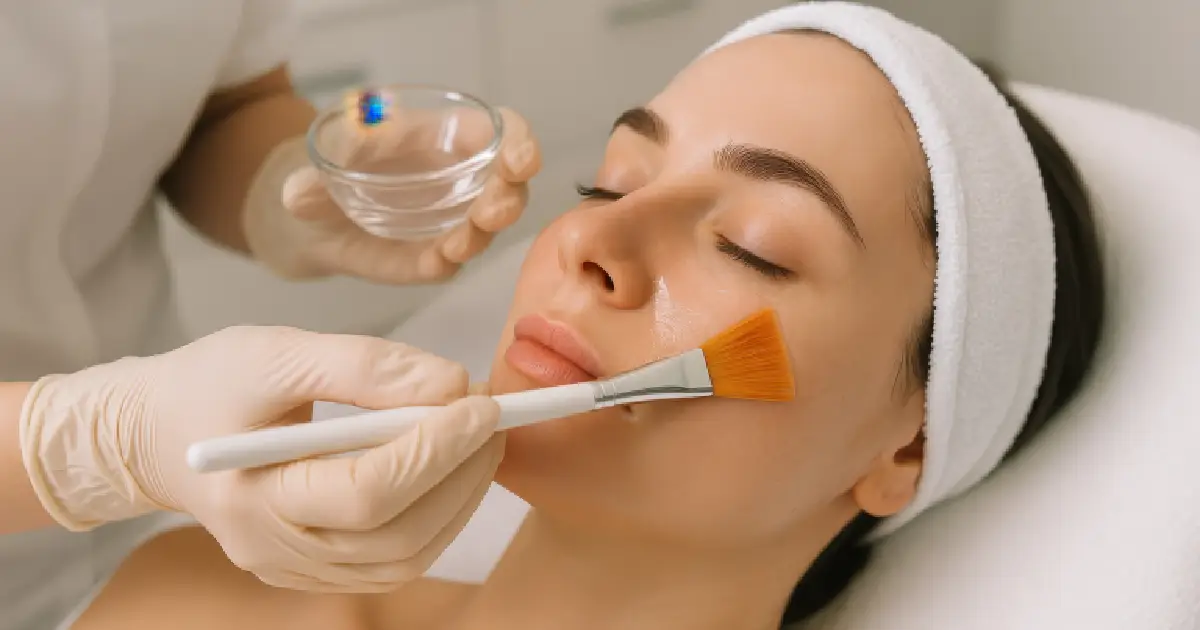
You catch your reflection in a certain light, and your skin looks a little rougher than you remember. Maybe soft lines near your eyes that used to stay put are now showing up. It is a quiet, deflating moment, and it sends a lot of people looking for answers. That is where a chemical peel treatment at Mandalyn Academy comes in.
Why do peels improve texture before they touch fine lines?
Texture improves first because exfoliation happens right away, while line softening builds slowly underneath. The acids lift dull, rough surface cells immediately. Collagen renewal in deeper layers takes weeks, not days. Depth matters too. Our Basic Chemical Peel gently resurfaces dullness & uneven texture, while our Advanced Chemical Peel uses customized passes to reach deeper & address fine lines more directly.
What Chemical Peels Can Realistically Change About Fine Lines and Texture
A chemical peel improves skin texture more consistently than it improves fine lines, & both results are real when you set honest expectations from the start.
Texture is where peels do their steadiest work. By clearing away the dull, uneven layer of dead cells on the surface, a chemical peel for skin texture leaves skin softer and more even-looking. Most clients feel the change before they see it, usually the first time they wash their face and notice how smooth it is.
Chemical peels for fine lines work on a gentler scale. They soften and blur rather than erase. Surface lines and early crepey texture tend to respond best. At the same time, deeper creases that stay visible when your face is completely relaxed usually call for a different conversation with your provider.
Here is the honest ceiling. A peel improves skin surface quality. It does not relax the muscle movement that creates expression lines, so the lines that appear when you smile or squint will still appear when you smile or squint.
When You Start Seeing Results
Most people see texture changes within the first week to ten days, once the peeling is finished. The first few days are not results days, and that is the part worth preparing for. Your skin may look flushed, feel tight, and then begin to flake, especially after an advanced peel where visible shedding is expected.
If no one warns you, that stage can be discouraging, and plenty of clients wonder whether they made a mistake. You did not. The flaking is the treatment doing its job, not a sign that something went wrong.
Once it settles, you get the part you were waiting for. The surface underneath looks smoother and brighter, pores can look a little finer, and makeup tends to sit better than it did before.
Fine-line softening runs on a slower clock. Give it several weeks, and expect something gradual rather than sudden. Most people notice it sideways, in a photo they weren’t posing for or a quick morning glance in the mirror, rather than in one dramatic reveal. If you are timing a peel around an event, give yourself at least two weeks so your skin settles fully.
How Long Chemical Peel Results Last
Results from a single peel typically last several weeks because skin keeps renewing itself, and the surface you treated eventually turns over.
That is not a flaw in the treatment; it is simply how skin works. Smoothness from one peel softens as new cells cycle through. Collagen-related improvement that affects fine lines tends to last longer than surface exfoliation, which is why a series usually outperforms a single appointment.
Sun exposure plays a part too. A chemical peel for sun damage can improve tone & texture, but continued sun exposure keeps adding to the problem, so unprotected skin loses ground faster. Many clients keep things steady with a monthly basic peel as maintenance.
How Many Peels It Takes to See a Real Difference
Most clients notice brightness and smoothness after one peel, but meaningful, lasting change usually takes three to six peels.
A single peel is a real refresh, and for many people, it is enough before an event or as a monthly reset. Longer-standing concerns ask for more patience. Texture that has built up over years, and lines that have been settling in for a while, respond better to repeated, controlled treatment than to one session. That is why Chemical Peels in American Fork, UT at Mandalyn Academy are offered in a six-session series.
Spacing matters as much as the number. We schedule peels with recovery time in between so your skin fully resets instead of getting overworked. More often is not better here, & our team at Mandalyn Academy will slow you down if your skin needs it.
What Determines How Much Improvement You See
Results vary from person to person, and four things explain most of that difference.
- Peel strength and depth. A gentle basic peel and a layered advanced peel are not the same treatment and do not have the same ceiling.
- Where you are starting from. Accumulated sun damage, skin thickness, and how long the texture concern has been there all shape what is realistic.
- Your skin tone and sensitivity. Estheticians use the Fitzpatrick skin type scale, a classification from I (very fair) to VI (very dark), to match the right formula to each person, since the wrong strength on the wrong skin can lead to irritation or uneven pigment.
- Your aftercare. Daily sunscreen is not optional after a peel. Freshly resurfaced skin is more vulnerable to the sun, and skipping protection quietly undoes the work.
That is why a chemical peel for wrinkles or rough texture should start with a skin assessment, not a menu pick. Matching the right strength to your skin is most of what separates a result you love from one that disappoints.
Ready to Talk It Through
Your skin does not need fixing. A chemical peel is simply one way to help it look and feel more like itself again. If you are wondering whether one suits your skin, the team at Mandalyn Academy would love to talk it through with you. Book a Chemical Peel Consultation today.